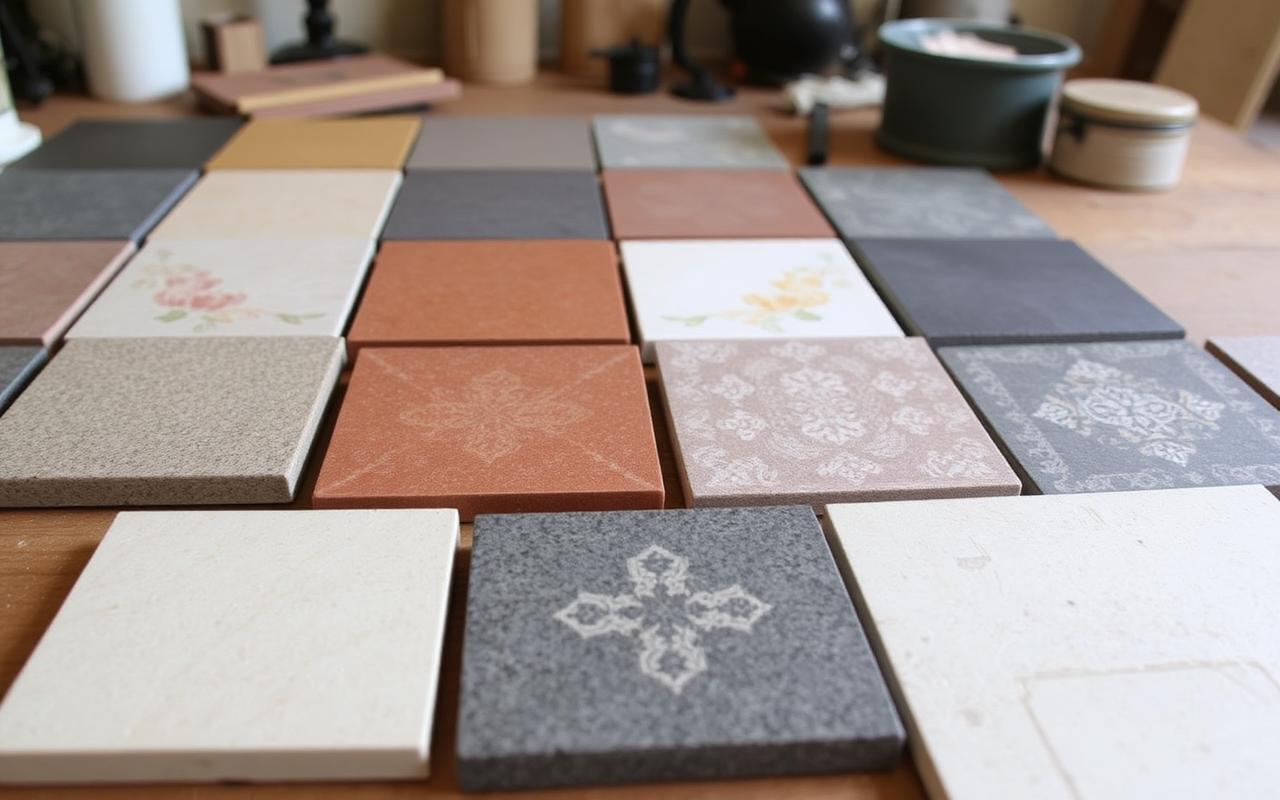
Stand in a tile showroom for ten minutes and you'll be handed a porcelain that looks indistinguishable from marble, a travertine that looks like porcelain, and a natural limestone that looks like both. The lines between materials have blurred to the point that even experienced renovators struggle to tell them apart at arm's length. But the materials behave very differently in a coastal home — and on the Sunshine Coast, where humidity, UV and salt air are non-negotiable variables, the wrong choice gets expensive fast.
What porcelain actually is
Porcelain is a ceramic tile fired at very high temperatures (typically 1200°C+) until it vitrifies. The result is a tile that's extremely dense, almost completely non-porous (under 0.5% water absorption), and dimensionally stable. Modern porcelain is digitally printed on the surface, which means a single tile can carry photographic-quality detail — including the veining and movement of natural stone.
The good versions of stone-look porcelain are genuinely difficult to distinguish from the real thing without crouching down and inspecting the edge. The cheap versions are obvious — repeating patterns every fourth tile, flat colours, machine-cut edges. If you're comparing tiles in a showroom, ask how many "faces" the print run has. A premium porcelain will have 30 or more unique faces so the pattern never visibly repeats.
What natural stone actually is
Natural stone is exactly that — cut and polished slabs of marble, travertine, limestone, granite or bluestone, with all the variability that implies. Two slabs from the same quarry, cut two metres apart, can look noticeably different. That variability is what makes stone feel alive in a space, and it's something porcelain still can't fully replicate, no matter how good the printer.
Stone is porous. Marble especially. It needs to be sealed when installed and re-sealed every 12 to 24 months depending on use. An unsealed marble countertop will stain from a glass of red wine in minutes. An unsealed travertine floor will absorb sunscreen, salt water and dirt over a summer and look tired well before its time.
The coastal climate factor
On the Sunshine Coast, three environmental factors push our recommendations toward porcelain for most jobs.
First, humidity. Year-round high humidity means surfaces are damp for longer. Porous stone will absorb that moisture and, in shaded outdoor areas, develop a mossy patina within a year or two. Porcelain shrugs it off.
Second, salt. If you're within five kilometres of the coast, salt-laden air is doing constant low-grade damage to everything outside. Some stones — particularly limestone — can pit and erode from salt exposure over time. Porcelain is essentially inert.
Third, UV. Strong Queensland sun fades coloured grouts and can chalk the surface of some natural stones. Porcelain colourfastness is excellent — a porcelain alfresco floor will look the same in ten years as it does today.
Where natural stone still wins
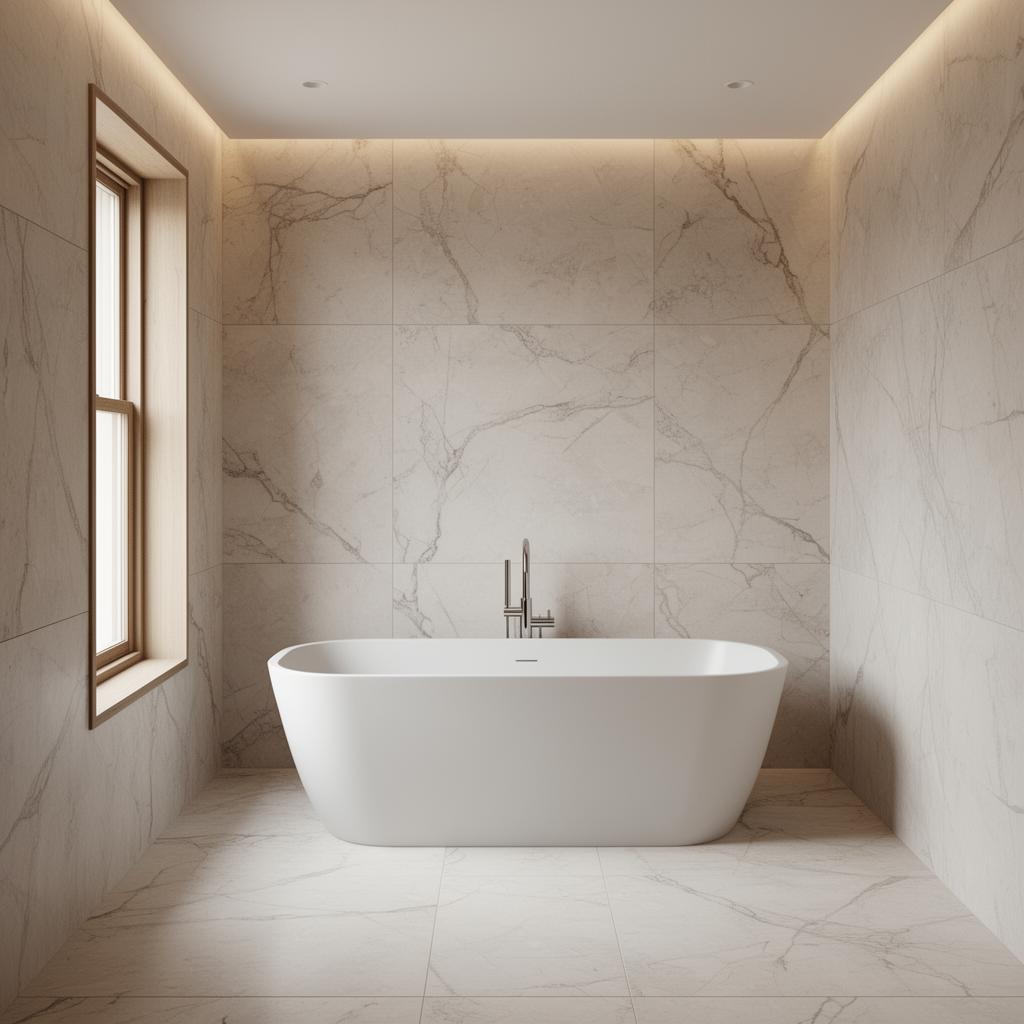
Despite all that, there are absolutely places where we still recommend real stone. Feature walls inside the house — behind a freestanding bath, around a fireplace, as a kitchen splashback — are perfect for stone. The lighting is controlled, the exposure to moisture is limited, and the depth and movement of real marble or travertine simply makes the room feel different.
Internal floors in formal living areas, where the stone can be properly sealed and the traffic is shoes-off, also work beautifully in stone. There's a softness underfoot to a honed travertine floor that porcelain can't match.
Bench tops are a closer call. Marble bench tops will etch and stain — but a lot of people genuinely love that lived-in patina. If you're not one of those people, go porcelain or a sintered stone like Dekton.
Cost comparison
Per square metre, premium stone-look porcelain (600x1200, well-known European or Australian brand) typically lands between $80 and $160 supply only. Real natural stone in the same size lands between $200 and $600 supply only, and can climb much higher for premium marbles like Calacatta.
Installation costs are similar — but stone often requires additional sealing, more careful handling (it chips more easily), and longer lead times. A natural stone job will usually finish a week or two later than a porcelain job of the same scope.
Maintenance reality
A porcelain bathroom needs a wipe down with a pH-neutral cleaner. That's it. Grout sealing every couple of years if you want to be thorough.
A natural stone bathroom needs the same wipe-down, plus annual re-sealing of the stone, plus careful avoidance of acidic cleaners (vinegar, citrus, anything labelled "bathroom cleaner" without checking the pH). Marble in particular is unforgiving — a single splash of toilet cleaner will etch the surface permanently.
If you have kids, dogs, or simply don't want to think about your floor more than once a year, this is the deciding factor for a lot of clients.
Our default recommendations
For Sunshine Coast homes, our default brief looks like this. Wet areas, kitchens, alfresco and pools: porcelain, every time. Internal floors: porcelain unless the client specifically wants stone and accepts the maintenance. Feature walls and hero moments: real stone, sealed properly, treated with respect.
This isn't a rule. It's a starting point. If you've fallen in love with a specific stone and you understand the trade-offs, we'll absolutely install it — we just want you to know what you're signing up for before the deposit goes down.
A note on outdoor pavers
External-grade porcelain has come a long way. Modern 20mm thick porcelain pavers can be laid on pedestals, on sand, or glued to a slab, and they're rated for high slip resistance (R11 or R12). For pool surrounds and alfresco areas on the Coast, this is now what we specify almost exclusively. Natural stone outdoors looks beautiful for the first few years, then needs progressively more attention to keep looking that way.
Get a quote
Planning a tiling project on the Sunshine Coast?
Call Maroochydore Tiling on 0432 651 609 or request a free quote.